

Quick Summary: Couples with simple weddings can stick to paper checklists or guides, but once plans involve multiple vendors, guests, and real-time updates, a wedding planner app becomes essential. Apps help manage budgets, guest lists, and vendor communication more efficiently, reducing mistakes and stress. Choosing between a guide and an app depends on the wedding size and complexity, with digital tools increasingly popular for their collaborative features.
Most couples do better with a Wedding Planner App once vendors, guests, budgets, and shared decisions pile up. A guide still works if you want a simple Wedding Planning Checklist without new tech. We’ve seen where plans break: missed dates, split notes, RSVP messes. This comparison gives clear Wedding Planning Tips and more Wedding Planning Tips so your system fits real life, not just good intentions.
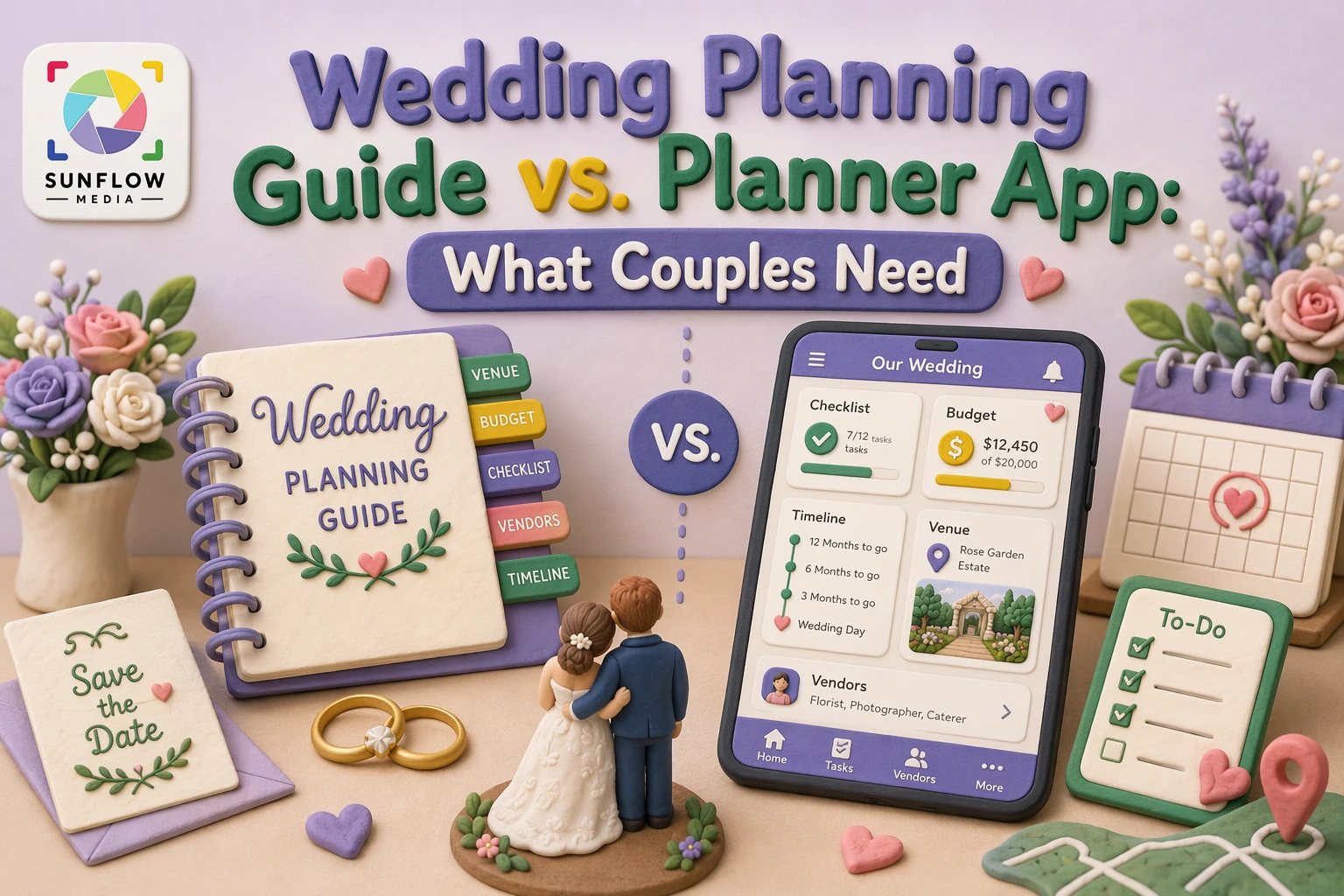
Wedding Planning Guide vs. Planner App: At a Glance
| Wedding planning guide | Wedding planner app | |
|---|---|---|
| Best for | Couples who prefer a simple, low-tech planning process | Couples who want real-time planning and shared visibility |
| Organization style | Static checklist, timeline, or printable workbook | Interactive dashboard with automated tools |
| Collaboration | Usually manual sharing by email, text, or paper | Built for partner and planner coordination |
| Guest and vendor tracking | Basic notes and separate spreadsheets | Strong, often includes RSVPs and contact management |
| Flexibility | High if you like customizing your own system | Moderate to high, depending on app features |
| Stress reduction | Best for straightforward, smaller-planning workflows | Best for reducing missed tasks and planning clutter |
How Wedding planning guide and Wedding planner app Compare
Wedding planning guide
A wedding planning guide is a checklist, workbook, or article that helps couples map tasks in order. It fits couples who want simple, low-tech Wedding Planning Tips and do not mind sharing notes by text, email, or paper. Its angle in this comparison is clarity and control without software.
Wedding planner app
A wedding planner app keeps tasks, budget, guests, vendors, and reminders in one dashboard, as shown in Brides’ app roundup. It suits couples who want shared visibility and fewer missed details. Its angle here is real-time teamwork and less planning clutter.
How the Planning Workflow Changes
When a simple checklist is enough
A checklist works well when your wedding is small, your vendor count is low, and one person handles most decisions. It gives you order without extra setup. The Knot’s free checklist sorts tasks by date and lets you customize them, which fits couples who mainly need reminders and a clear timeline free wedding planning checklist.
If you rarely need shared notes, guest updates, or vendor messaging, stay simple.
- Best for local weddings
- Best for under 6 to 8 vendors
- Best for couples who like paper or one spreadsheet
When a digital system becomes necessary
A planner app starts to matter when both partners, parents, and vendors all need the same live info. The workflow shifts from “remember tasks” to “manage moving parts.” Apps can combine checklist, budget, guest list, RSVPs, vendor contacts, and messaging in one place The Knot wedding planning app.
- Use an app for multi-event weekends
- Use it if guest changes happen often
- Use it when approvals and files must stay synced
Also Read: 7 Wedding Planning Guide Essentials Every Couple Should Track
Collaboration, Budgeting, and Guest Management
Use one shared system or you will duplicate work fast. A live sheet or app should assign owners for each task, vendor, and deadline. The Knot’s planning spreadsheet shows why shared guest, budget, and vendor tabs help both partners update the same source instead of texting edits back and forth.

Guest count drives budget more than almost anything else. ConsumerAffairs reports that wedding spending rose 8.5% in early 2026, and trimming the guest list remains a top way to save. Track:
- estimated vs actual spend
- deposits paid
- RSVP status
- meal choices
- dietary needs
Keep budget and guest data in the same place. One extra table can affect catering, rentals, and favors at once.
Local vendors notice the difference. Clean timelines, final counts, and one point of contact mean fewer mistakes. Photo and video teams like Sunflow Media can work smoother when family lists, must-capture names, and schedule changes live in one updated plan.
Also Read: Best SE Michigan Wedding Media 2024 Service Review
Which Should You Choose for Your Wedding?
Choose a guide if you want simple planning, paper notes, and full control without extra logins. It works best for smaller weddings, short guest lists, and couples who do not need live updates. If you like checking things off by hand, a guide keeps planning calm and cheap.
Choose an app if you want shared access, reminders, and fewer missed details. The Knot says couples now use new planning tech, including AI tools, more often in 2026 according to its study. Zola also notes that checklists and timelines reduce planning stress in its advice.

Want less stress and better wedding-day coverage? Book Sunflow Media for customizable photo, video, livestream, and photo booth support that fits your planning system.
Frequently Asked Questions
Q1: What are the key differences between using a wedding planning guide and a wedding planner app?
A guide gives advice and checklists. An app tracks dates, budgets, guest lists, and updates in real time.
Q2: How do wedding planning apps improve organization and reduce stress for couples in the US?
They keep everything in one place, send reminders, and make sharing tasks with partners or family much easier.
Q3: What features should I look for in a wedding planning app to ensure practical and seamless planning in the US?
Look for budget tracking, guest list tools, seating charts, payment reminders, vendor notes, and easy mobile access.
Conclusion
Choose a wedding planning guide for simple weddings and clear tasks. Pick an app when details pile up. Many couples use digital tools, and 36% now use AI, while The New York Times checklist shows structure still wins.