

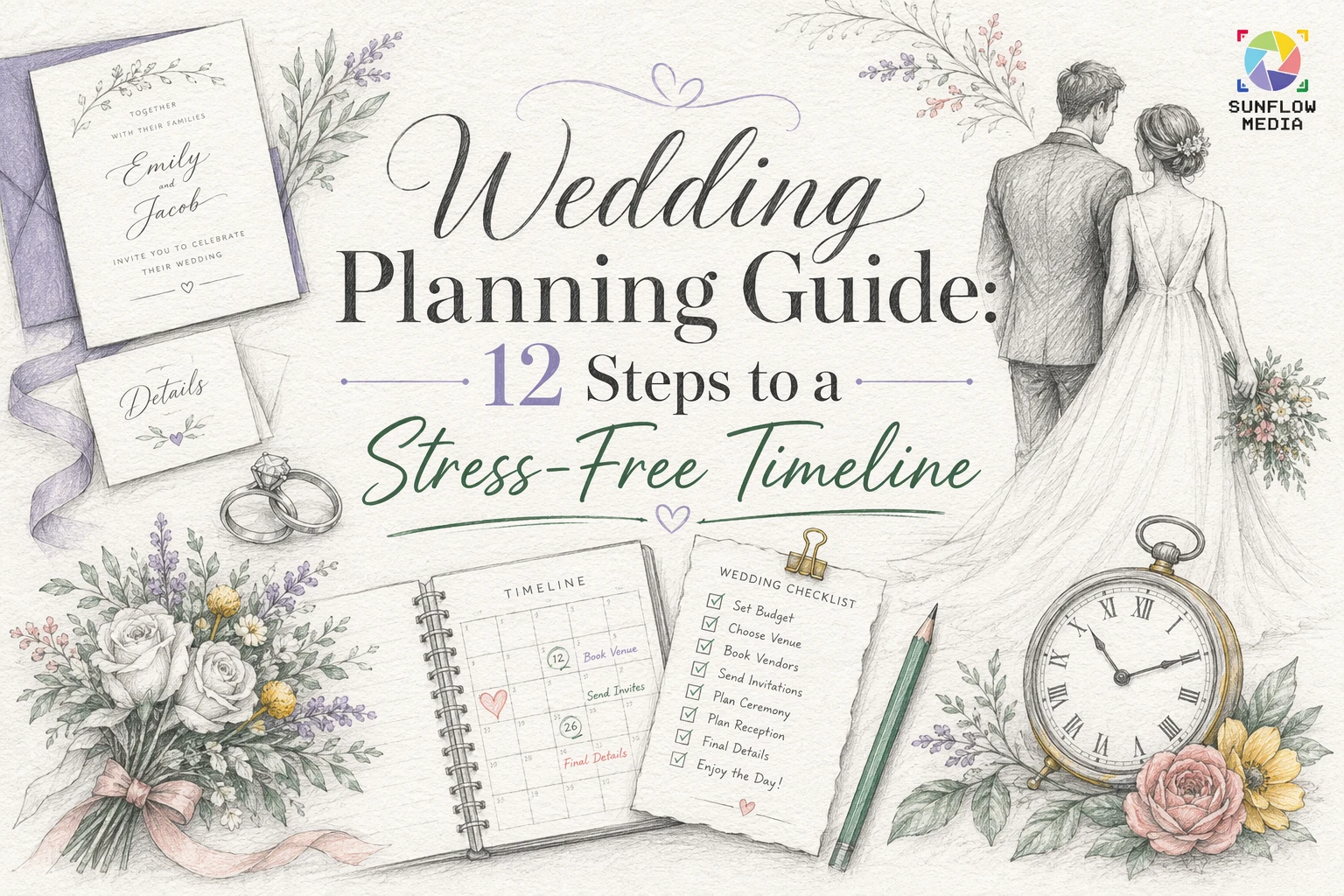

Quick Summary: The best way to plan a stress-free wedding is to prioritize setting your budget and guest count before booking venues or vendors. Book your venue early, then secure key vendors like photographers and caterers, and build your timeline backward from the ceremony. In the final weeks, confirm details, finalize guest counts, and create a detailed day-of schedule with buffers to keep everything running smoothly.
A smart Wedding Planning timeline stops one of the biggest mistakes: booking a venue before you lock your budget and guest count. That choice can throw off every next step. This guide fixes that problem by showing the right order of decisions, not just a basic Wedding Checklist. Built from real Wedding Planning patterns vendors see every season, this Wedding Planning guide maps a clear Wedding Timeline to help couples avoid stress, delays, and costly timing errors.
1. Set the budget and guest count first
Your budget and guest count decide almost every later choice. Venue size, food bill, rentals, photo coverage, and bar costs all follow these two numbers. In 2026, the average US wedding cost is $34,200 and the average guest count is 117, according to The Knot’s wedding cost data and guest list data. Use those as context, not a rule.
- Pick a spending ceiling you can afford
- Draft an A-list and B-list guest count
- Match both before you tour venues

Set priorities by ranking what matters most to you both:
- Venue and guest experience
- Photography and video
- Food and drink
- Decor and extras
If you skip this step, you will likely fall in love with options that do not fit the real plan.
Also Read: How to Choose Michigan Wedding Venues for Any Season
2. Book the venue and core vendors early
Choose your venue first. It sets your date, guest count, catering rules, and often your whole look. Both The Knot and Martha Stewart note that venues often book 6 to 18 months ahead, with a year out being a smart target for popular dates. If you pick flowers, rentals, or a color plan first, you may redo those choices once the space is locked.

Lock in the vendors that fill up fastest right after. Start with:
- Planner
- Photographer
- Videographer
- Caterer if the venue does not include one
- DJ or band
Photo and video teams usually take only one wedding per day, so waiting limits your best options fast. If preserving the day matters most, book trusted teams like Sunflow Media early.
Also Read: Wedding Planning Guide vs. Planner App: What Couples Need
3. Build the middle timeline around guest communication and details
Use save-the-dates and your wedding website as the single source of truth. Send save-the-dates first, then keep travel, hotel blocks, registry, and schedule notes on the site. That cuts repeat questions and keeps updates in one place. Reminder mailings work – the Census used staged reminders after initial invites to raise response and reduce confusion, according to this Census overview.
Handle details in order, not all at once:
- Finalize attire needs.
- Approve stationery style and wording.
- Confirm guest logistics like shuttles, room blocks, and meal choices.
A sequenced mail plan can lift response rates, as shown in Census mail timing research.
Tip: If guests cannot find info fast, they will text you instead.
Also Read: 7 Wedding Planning Guide Essentials Every Couple Should Track
4. Finish with the final 8 weeks and wedding day timeline
In the last 8 weeks, stop making big changes. Focus on locking details, handing off info, and protecting your energy.
Confirm counts, contracts, and logistics
Your RSVP deadline should land about 3 to 4 weeks before the wedding, and no later than 2 weeks before, according to The Knot’s RSVP timeline. Then:
- Send final guest counts to the venue and caterer
- Recheck vendor balances, arrival times, and contact names
- Confirm rentals, floor plan, and seating chart
- Pack tips, marriage license, rings, and small personal items
Put one person in charge of vendor questions on wedding day. It should not be you.
Create a day-of timeline with buffer time
Most couples hire about 13 vendors, so timing matters, per The Knot Real Weddings Study. Build a simple timeline with 10 to 15 minute buffers between each major moment.
- Hair and makeup
- Getting ready photos
- First look or pre-ceremony portraits
- Ceremony
- Cocktail hour
- Reception events and exit
If one part runs late, buffer time keeps the whole day from slipping.

Keep your timeline calm and your memories covered. Sunflow Media helps couples plan smarter with flexible photo, video, live stream, and photo booth services. Reach out early, lock your date, and avoid last-minute stress.
Frequently Asked Questions
Q1: What are the essential steps to create a stress-free wedding timeline?
Set your date, budget, venue, and guest count first. Then book key vendors, build backward from ceremony time, and add buffer time for travel, photos, hair, and delays.
Q2: How can a wedding planning guide help reduce stress during wedding prep?
A good guide puts tasks in the right order. That helps you avoid late bookings, rushed choices, and budget mistakes.
Q3: What are the key milestones to include in a 12-month wedding planning checklist?
Include venue booking, vendor contracts, dress or attire ordering, invitations, final headcount, timeline review, and payment deadlines.
Conclusion
A calm wedding timeline comes from doing decisions in the right order, not doing everything fast. Most U.S. couples stay engaged about 15 months, so early choices on budget, venue, and guest count shape every step that follows.