
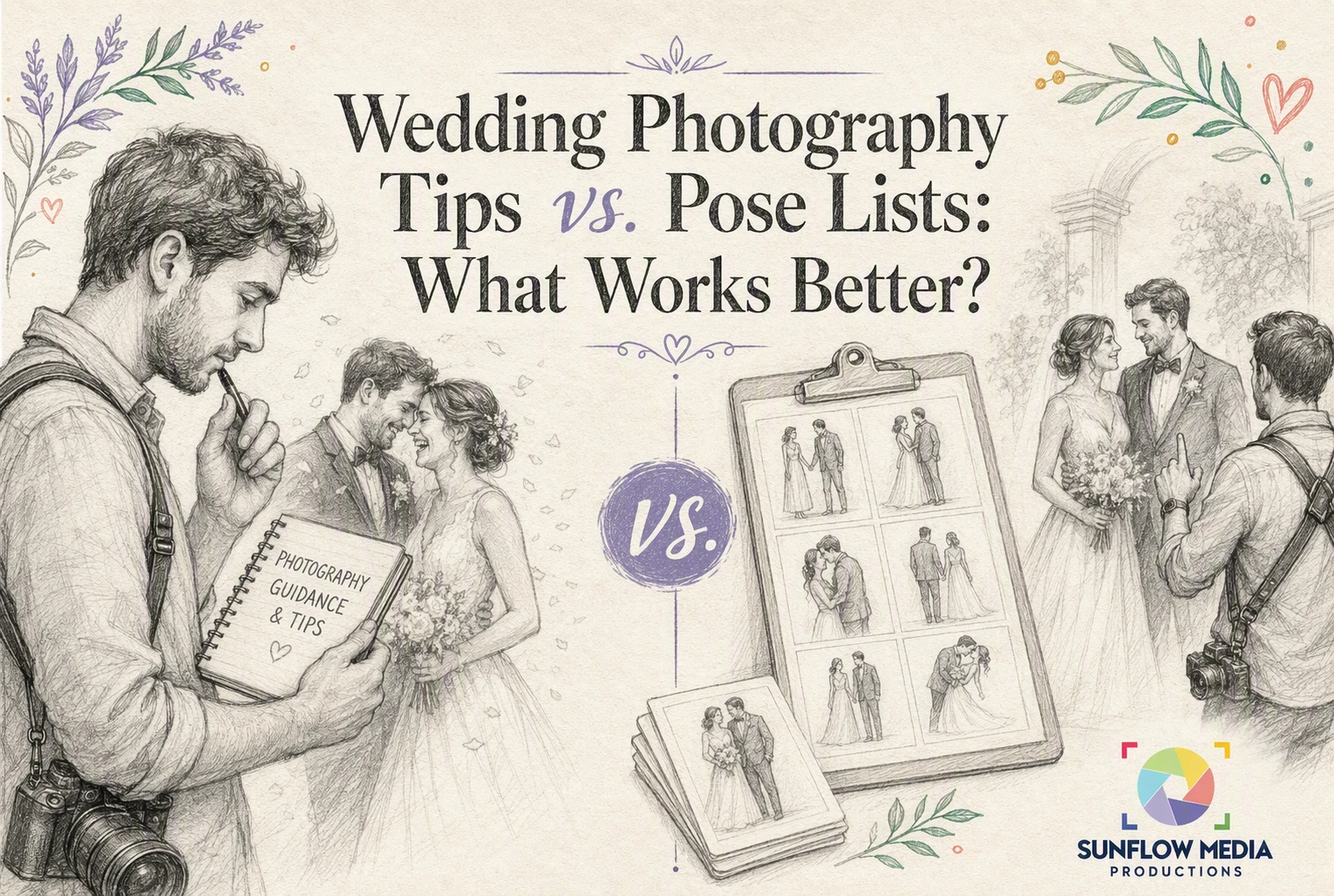

Quick Summary: Wedding photography tips offer flexible guidance for natural moments, while pose lists ensure must-have formal portraits are captured. The best approach is a hybrid: keep a short list of essential family shots, then let the photographer direct relaxed, candid interactions. This balance prevents stiff poses and missed key photos, creating a smooth and authentic wedding album.
A long pose list can make portraits stiff. Asking only for candid shots can miss key family photos. The best wedding poses come from a short priority list and calm direction. These wedding photography tips show where wedding pose ideas help, what they miss, and how couples, planners, and photographers can keep portraits smooth, natural, and on time.
Wedding Photography Tips vs. Pose Lists: At a Glance
| Wedding photography tips | Pose lists | |
|---|---|---|
| Primary purpose | Guide decisions and interactions | Specify portrait setups |
| Best for | Natural, adaptable coverage | Must-have and formal images |
| Flexibility | High | Low to medium |
| Risk | Too vague without a plan | Stiff or repetitive results |
| Ideal use | Build the overall portrait approach | Provide anchors and priorities |
How Wedding photography tips and Pose lists Compare
Wedding photography tips
Wedding photography tips give couples and photographers flexible guidance on timing, comfort, light, and real interaction. They suit those who want natural coverage but need a clear portrait approach. Natural direction often uses simple movement rather than fixed positions.
Key strengths
- Adapts to people, weather, and the timeline
- Supports genuine expression
Pose lists
Pose lists set out specific couple, family, and group setups. They serve couples who need key formal portraits covered, but can feel rigid if followed too closely.
Key strengths
- Protects must-have group photos
- Gives portrait time a clear order
What Is the Difference Between Wedding Photography Tips and Pose Lists?
Tips Create a Framework, Not a Script
Photography tips shape the day: allow buffer time, use good light, and keep people at ease. They help a photographer spot real moments while protecting must-have shots. UC San Diego’s wedding guide also stresses scouting and clear planning.
Pose Lists Give You Useful Anchors
Pose lists are quick visual prompts for formal portraits, such as a parent hug or full wedding party photo. Use a short list, then add movement and conversation.
Ask for a prompt, not a frozen pose.
| Tips | Pose lists |
|---|---|
| Guide coverage | Guide placement |
| Protect moments | Secure formal photos |
Also Read: Create Cherished Wedding Memories with Expert Videographers
Do Wedding Photography Tips Work Better Than Using a Pose List?
Why Flexible Direction Usually Looks More Natural
Flexible prompts beat rigid poses for most couple photos. Ask couples to walk, lean in, or share a private joke. That creates real movement and expression. NYU research found candid images often seem more genuine to viewers.
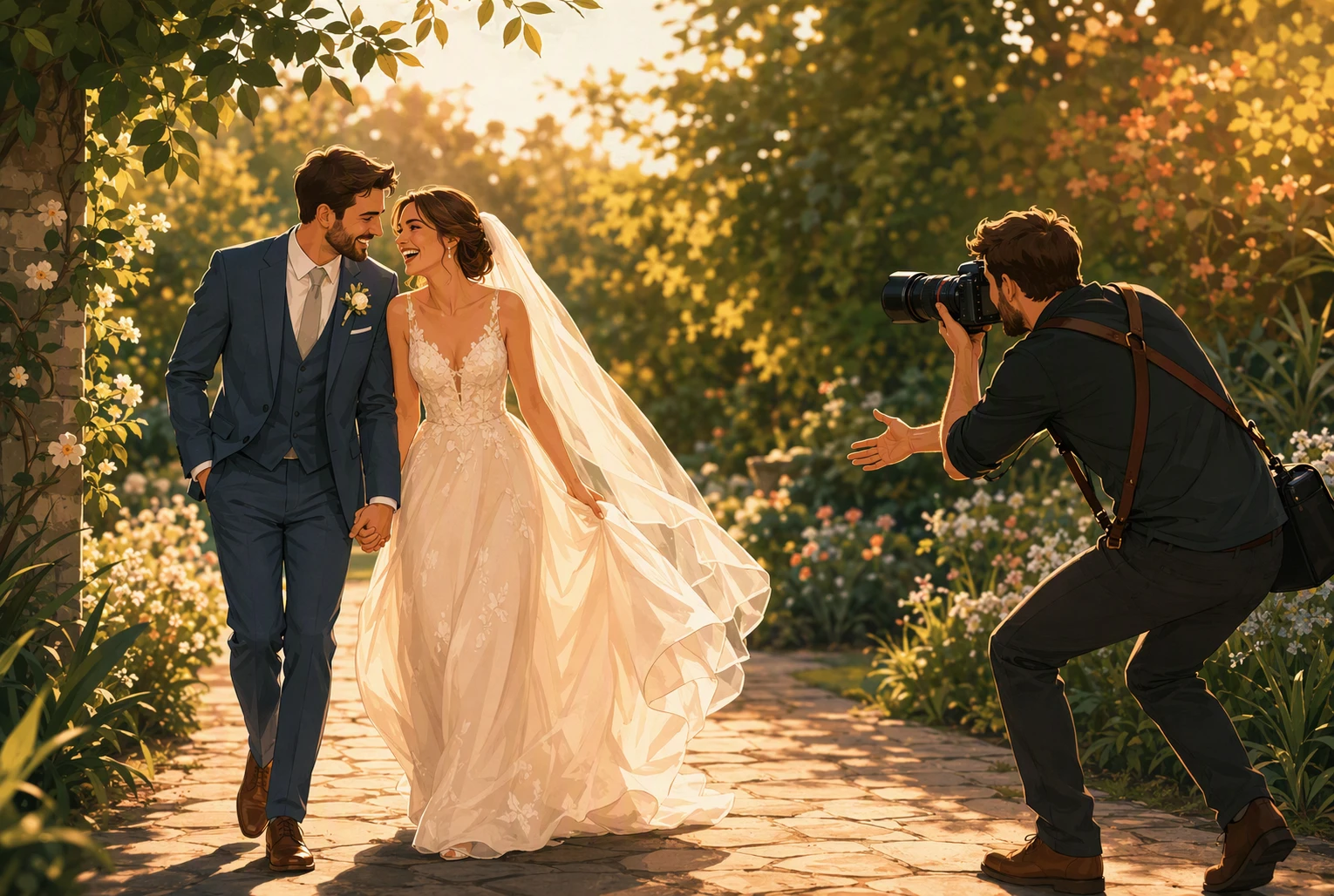
Give an action, not a frozen command: “Tell them what made you laugh this morning.”
Where a Pose List Still Saves the Day
Keep a short must-have list for photos you cannot repeat:
- Couple with each parent
- Full wedding party
- Grandparents and family groups
| Use tips for | Use a list for |
|---|---|
| Candid moments | Formal family portraits |
Also Read: 9 Wedding Photography Tips for Sharp, Natural Couple Portraits
How Can Natural Wedding Poses Replace a Standard Pose List?
Build a Five-Part Portrait Plan
Skip the long pose list. Plan five must-have moments:
- Couple together
- Each partner alone
- Wedding party
- Immediate family
- Full family
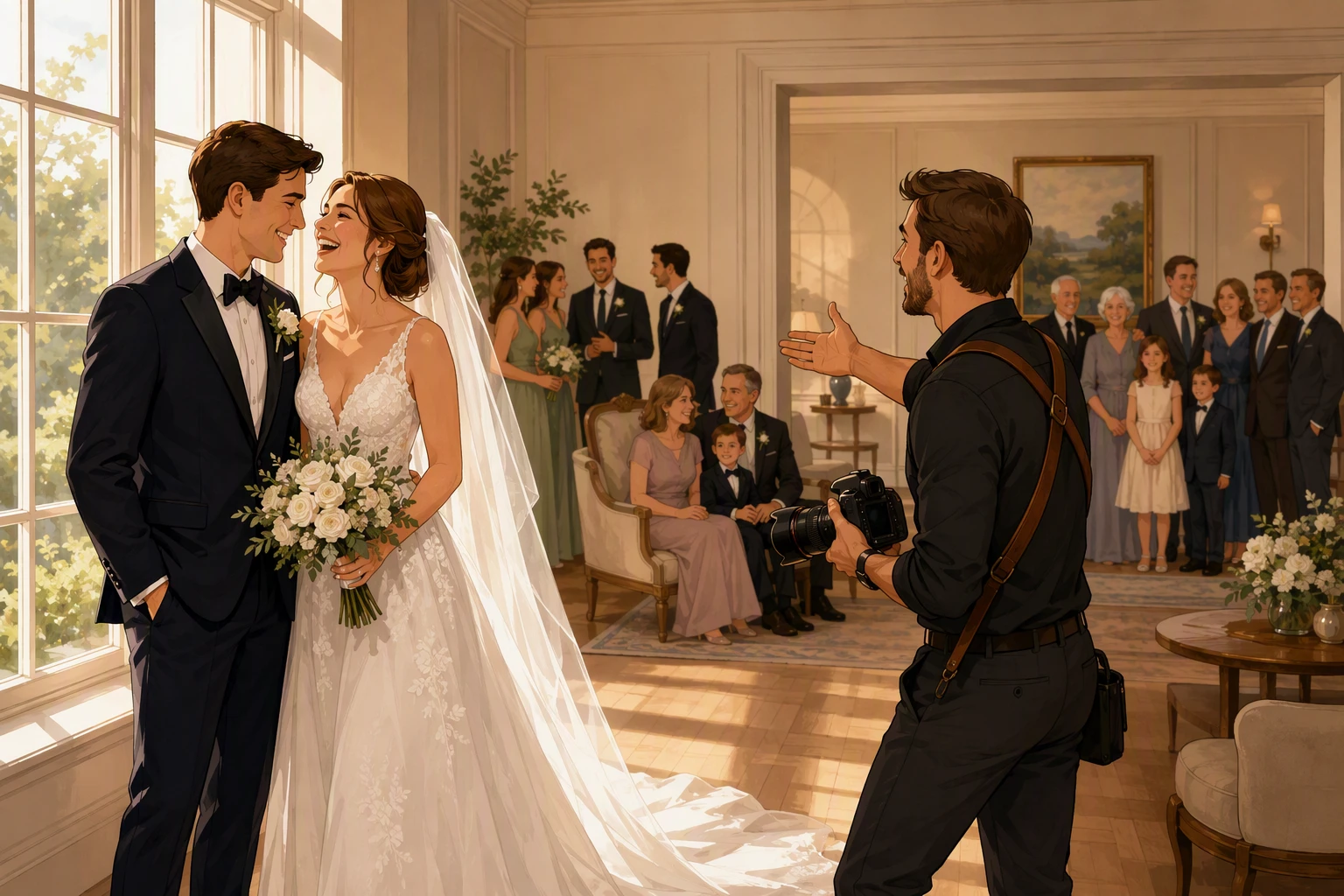
Use light direction, comfort, and time to guide each set. Give clear, upbeat prompts, since UC Davis recommends specific, positive direction.
Turn One Setup Into Many Images
Keep the group in place, then create variety with small actions:
- Look at each other
- Adjust a veil or jacket
- Hold hands
- Walk three steps
- Share a private joke
Natural does not mean unplanned. It means guided movement, with formal portraits protected.
| Setup | Quick variation |
|---|---|
| Couple facing camera | Turn inward and talk |
Also Read: Rent Wedding Photo Booth & 360 Video Booth Michigan for Unforgettable Memories
Which Approach Should You Choose for Your Wedding?
Choose a hybrid plan. Use a short shot list to protect must-have family groups and heirloom details. Then let your photographer direct only the portraits that need it.
| If you value | Best approach |
|---|---|
| Real reactions and movement | Photography tips and candid coverage |
| Clean family portraits | A focused pose list |
| Both | Hybrid coverage |
The Knot recommends narrowing your list to priorities before the day.
Keep pose ideas to five or fewer. Too many can interrupt the celebration.

Get natural moments and must-have portraits with a clear plan. Book Sunflow Media to tailor wedding coverage that feels effortless.
Frequently Asked Questions
Q1: What is the difference between wedding photography tips and pose lists?
Tips guide timing, light, and comfort. Pose lists name required shots. Use tips to create relaxed moments, then keep a short list for family portraits.
Q2: Do wedding photography tips work better than using a pose list?
Yes, for candid images. A pose list still prevents missed formal groups. Combine both, with a tight family list and flexible direction.
Q3: How can natural wedding poses replace a standard pose list?
Use small prompts: walk, hold hands, look at each other, or share a private joke. These actions give shape without stiff, repeated poses.
Conclusion
Use a short must-have list for formal portraits, then leave room for real moments. Clear communication helps couples feel comfortable and look more authentic, as UC San Diego notes.