

A first kiss lasts seconds. Great cinematic wedding videos also hold the breath before it, a partner’s reaction, rising guests, and clean sound. Most plans miss those links, leaving footage that feels random. This guide turns event videography ideas into a clear shot plan for cinematic event filming. Built on real wedding production needs, it covers story beats, motion, light, audio, timing, and backups for cinematic wedding videos.
Step 1: Turn the Wedding Day Into a Three-Part Story
Build the Emotional Arc
Plan cinematic wedding videos as a simple three-part story: anticipation, commitment, and celebration. Film storytelling often uses setup, conflict, and resolution, as explained in Oklahoma State’s film narrative guide. Here, the ceremony is the emotional peak, not a conflict.
- Beginning: details, letters, getting ready, first look
- Middle: processional, vows, rings, kiss
- End: hugs, toasts, dancing, private sunset portraits
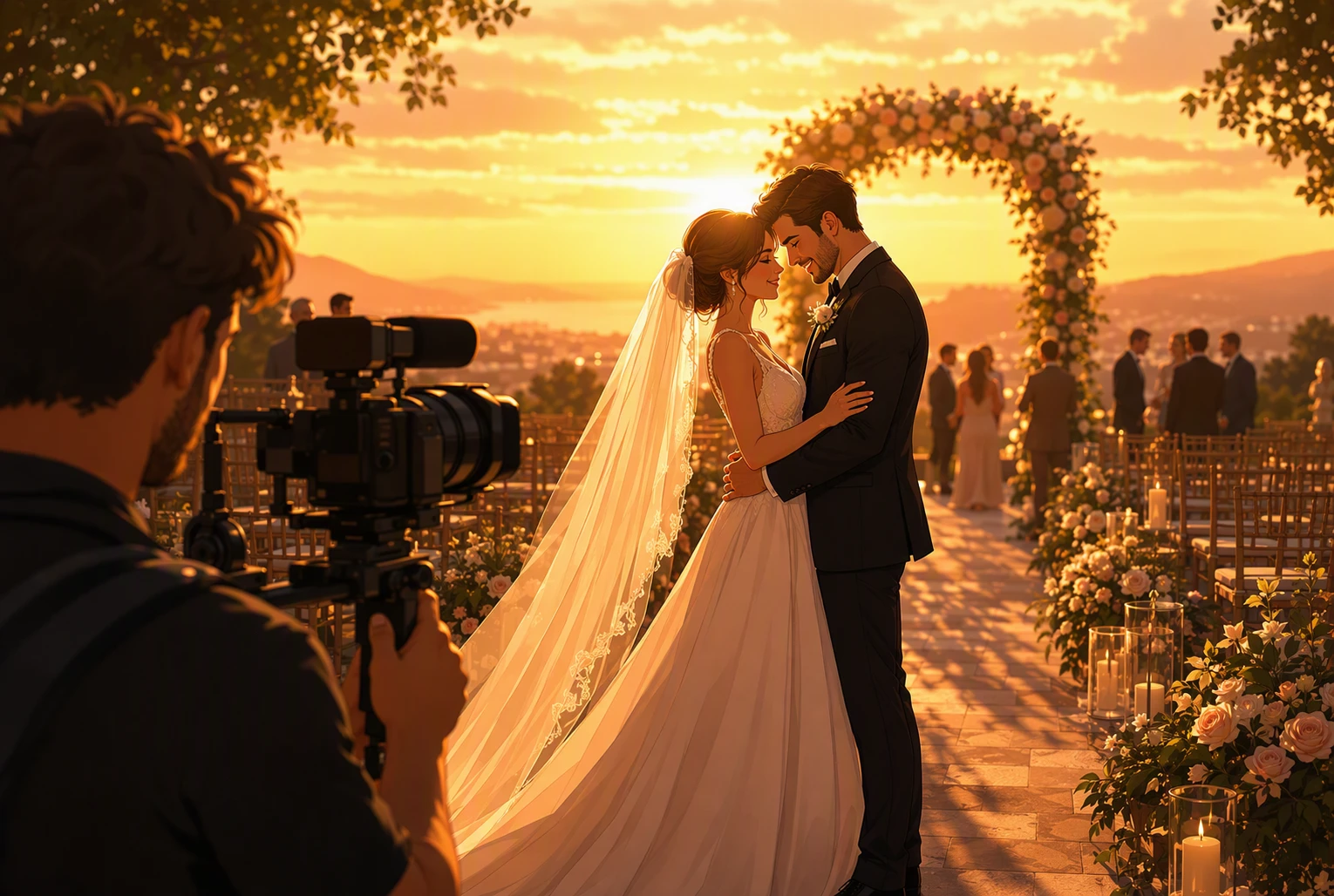
Choose one quiet beat for each part. A slow breath before vows can matter more than another wide room shot.
Mark Must-Have and Flexible Shots
| Must-have | Flexible |
|---|---|
| Vows and ring exchange | Champagne pop |
| Parent reactions | Outfit detail shots |
| First kiss | Extra dance-floor angles |
Give your videographer the must-haves first. Then let them chase real reactions and light. That balance keeps cinematic wedding videos personal, not staged.
Step 2: Design Each Scene With Wide, Medium, and Close Coverage
Use the Three-Layer Coverage Rule
Plan three shots for every key moment. A wide shot sets the venue and shows where people stand. A medium shot captures the action. A close shot catches feeling or detail. Columbia’s film glossary notes that wide shots help establish space, while closer framing directs attention.
| Shot | Wedding example | Purpose |
|---|---|---|
| Wide | Full ceremony aisle | Place and scale |
| Medium | Couple exchanging vows | Action and body language |
| Close | Hand squeeze or tear | Emotion and detail |
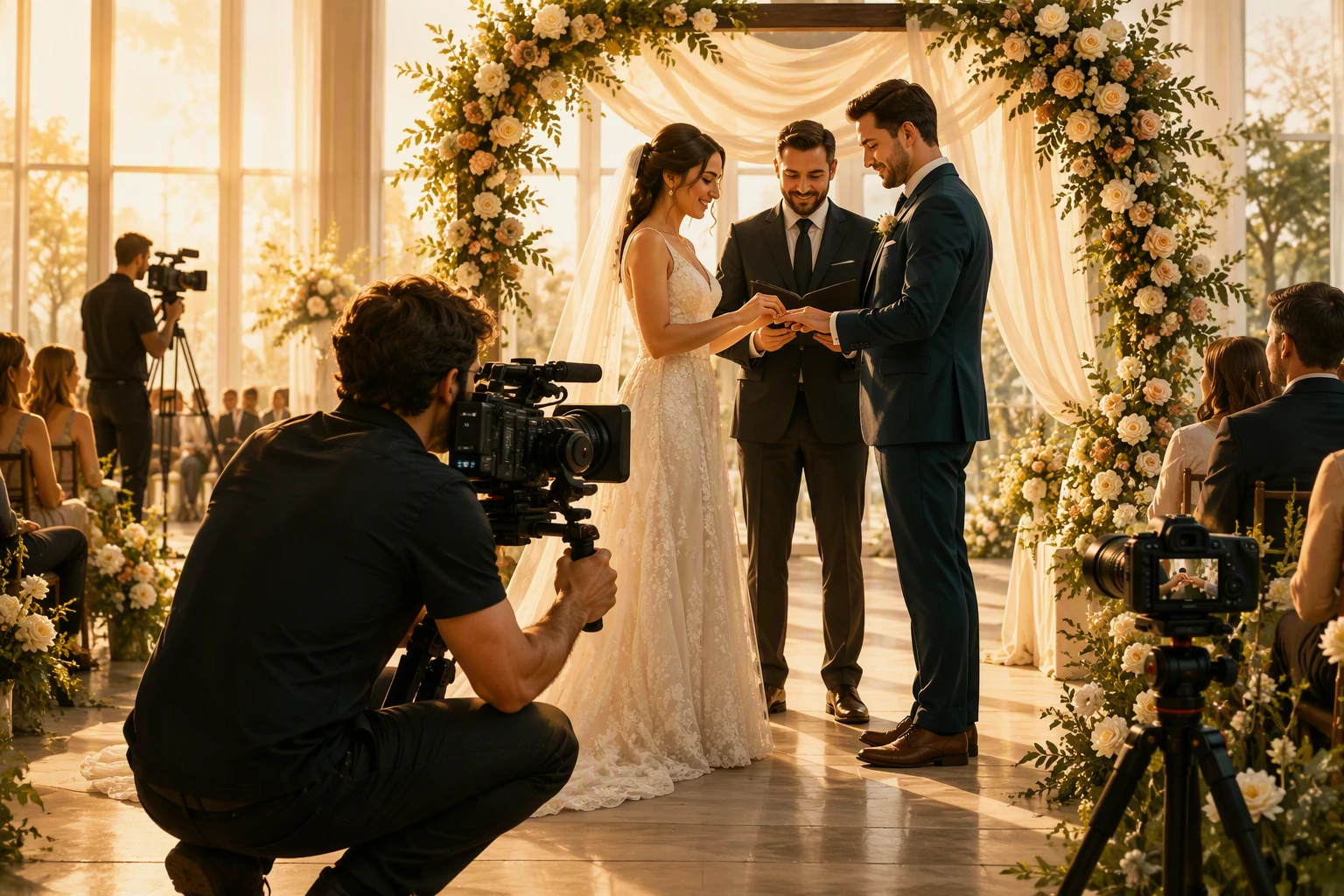
Get the wide shot first during one-time moments. It is your safety shot.
Choose Movement That Has a Reason
Move only when movement adds meaning.
- Track beside the couple entering the reception.
- Push in slowly during private vows.
- Hold still for speeches and reactions.
Avoid circling people just because a gimbal is available. A calm frame often feels more cinematic than busy footage.
Also Read: Event Videography Ideas: 12 Creative Ways to Capture Moments
Step 3: Match the Shot List to Light and Sound
Write a Lighting Note for Every Location
Add a light note beside each key shot: window light, shade, sunset, dim dance floor, or mixed color. Plan wide shots before the room fills. Save portraits for soft outdoor light. Test reception lighting early, since venues may use dimmable house lights and uplighting.
Keep one backup: if rain hits, use a window-lit indoor spot for vows and portraits.
Protect the Words That Make the Film Personal
Mark vows, letters, speeches, and parent reactions as audio-first moments. Ask for a lav mic on the officiant or groom, plus a recorder near speakers. UVA Chapel lists lavalier, lectern, and wireless microphones, so confirm what your venue provides before the day.
Also Read: Event Videography Ideas vs. Traditional Coverage: Key Differences
Step 4: Rehearse the Plan, Then Leave Room for Real Moments
Review the List With the Wedding Team
Walk through the shot list with the couple, planner, venue lead, and photo team. Confirm entrances, family groupings, tight time windows, and who can make quick calls. A short dry run reveals gaps before the day starts. UMN Extension notes that practice helps teams spot missed details and prepare backup plans.
- Name one point person.
- Check key locations.
- Agree on timing changes.
Keep the list clear, not rigid. It should guide the team, not pull attention from the day.
Use a Flex Block for the Story You Could Not Predict
Hold back 10 to 15 minutes in the plan for unscripted moments: a parent’s reaction, sudden rain, or a packed dance floor.
| Moment | Flex response |
|---|---|
| Schedule runs late | Prioritize vows and speeches |
| Weather shifts | Move to a covered location |
| Surprise happens | Follow it before resetting |

Plan a cinematic wedding film without guesswork. Sunflow Media turns your story beats, light, sound, and timing into lasting memories.
Frequently Asked Questions
Q1: How do I create a cinematic shot list for my wedding videography?
Map the day into story beats: prep, vows, portraits, speeches, and exit. For each, list a wide shot, close details, reactions, movement, and clean audio. Add a rain or delay backup.
Q2: What are the best camera angles for cinematic event videography?
Use wide shots to set the scene, eye-level shots for emotion, and close-ups for hands, faces, and details. Keep angles purposeful. Avoid filming every moment from the same height.
Q3: How can I use lighting to make my event video look cinematic?
Use window light for prep, place couples near soft light for portraits, and protect highlight detail in bright scenes. Ask the venue about reception lighting, then plan for dark dance floors.
Conclusion
Plan the story first, then match each moment with shots, sound, light, and backup choices. A clear shot list saves time and protects key memories, as University of Delaware guidance notes.