

Quick Summary: A story-driven wedding film starts with the story, not the camera. The article lays out a planning approach built around documentary style: keep the timeline relaxed so people forget the lens, share the moments that matter most, and run a pre-wedding consultation covering your story, key moments, schedule, venue, and camera comfort. The best results run 5 to 10 minutes, with a 60 to 90 second teaser, so the narrative holds without dragging. Sunflow Media frames itself as the team that handles this kind of natural, story-first filming so couples can stay present on the day.
Most couples think good wedding videography planning starts with a camera. It starts with a story. Without it, you get shaky highlight reels instead of a film that means something.
This guide walks through wedding videography planning step by step: choosing a style built on real wedding video storytelling, and the wedding videographer questions that reveal whether someone can capture your day naturally. We’ve filmed weddings across Michigan for years, and the best films were always planned, never lucky.

If wedding videography planning feels like one more task on a long list, let Sunflow Media handle it. We’ll capture your day as a natural, story-driven film while you simply enjoy it. Start now at Sunflow Media.
Frequently Asked Questions
Q1: What is a story-driven wedding film?
A story-driven wedding film follows a narrative arc instead of a random highlight reel. It has characters (you two), a setting, small tensions like nervous prep-room moments, and a payoff, such as your vows or a private last dance. The editor picks clips that connect emotionally, so the final film feels like a short documentary about your relationship. Music supports the story rather than hiding weak footage. When you review a videographer’s work, ask whether their films could stand alone without music and still make sense.
Q2: How do you plan a natural wedding video?
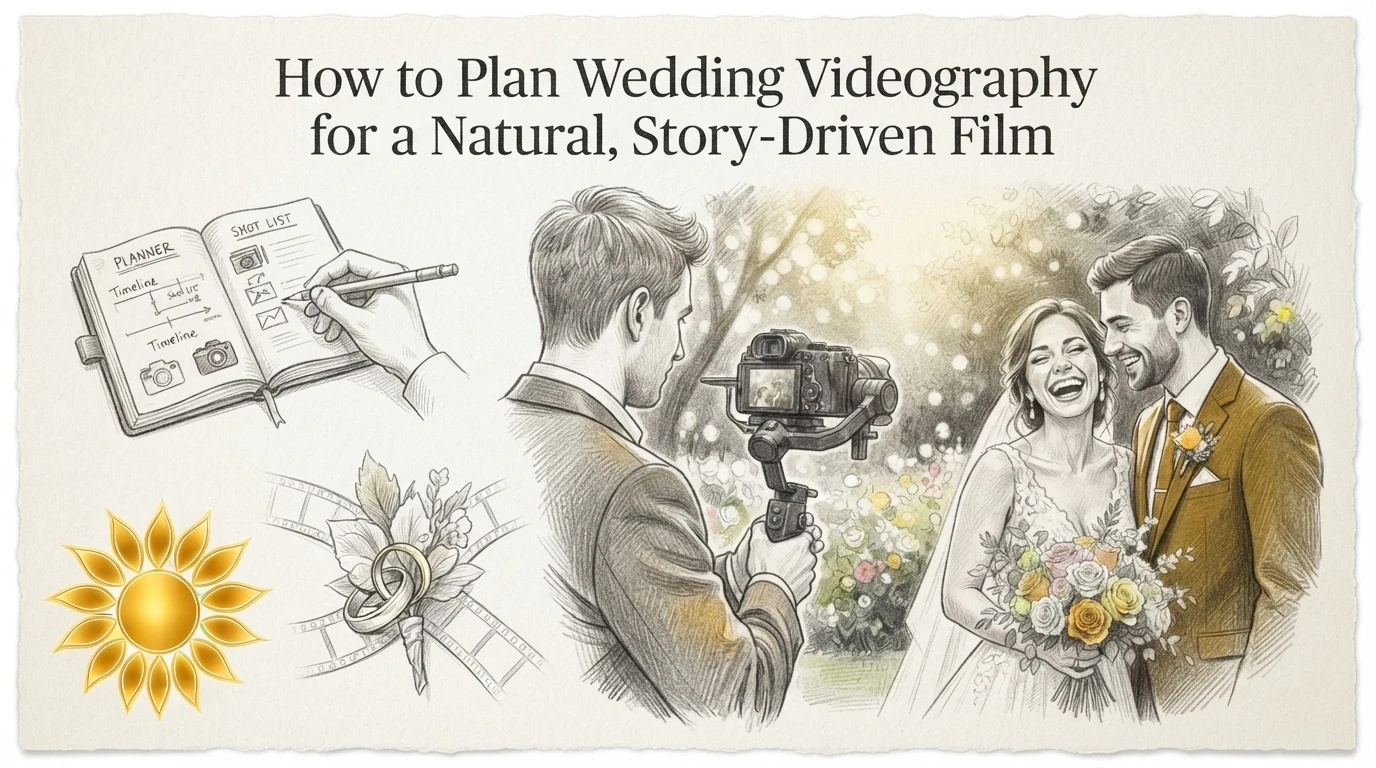
Plan for moments, not shots. Build buffer time into your timeline so no one feels rushed, because rushed people look stiff on camera. Tell your videographer the moments that matter most to you, like a reading, a reaction, or a family tradition, so they can position early and stay unobtrusive. Choose a documentary style that favors long, quiet takes over posed setups. Most importantly, spend a few minutes with your videographer before the day so their presence feels familiar, not like a stranger following you around.
Q3: What should I include in a pre-wedding videography consultation?
Cover five things: your story, your must-capture moments, your timeline, your venue, and your comfort level on camera. Share how you met and what your day is really about, since that shapes the film’s focus. Walk through the schedule and flag tight transitions. Mention venue lighting and sound restrictions, especially for ceremony audio. Ask how the crew works discreetly and how many people will attend. A good consultation ends with you knowing exactly what the film will include and how the day will flow around filming.
Q4: How long should a story-driven wedding film be?
For most couples, a 5 to 10 minute feature film works best. Long enough to carry a real story, short enough that friends and family actually watch it to the end. Many videographers also deliver a 60 to 90 second social teaser and full-length ceremony audio. Anything past 15 minutes usually needs documentary-level material to hold attention, so decide early whether you want that and confirm it is included in your package rather than added later at extra cost.
Q5: Do we need to be comfortable on camera to get a natural film?
No, but it helps to plan around it. Most couples feel awkward at first, so schedule thevideographer to arrive during quiet moments like getting ready, when you are focused on other things. Documentary-style shooters use long lenses and stay back, so you soon forget they are there. Some couples book an engagement session as a warm-up. If you still feel tense, talk to your videographer about it in advance; an experienced team will simply give you more space and capture reactions instead of directing poses.
Conclusion
Planning a story-driven wedding film comes down to a few choices: pick a documentary style, share your must-capture moments early, and build a relaxed timeline. Review films that make sense without music, and book someone you feel at ease around. For shot-level inspiration, the must-have wedding video shots list pairs well with the consultation questions above. Plan around moments, not poses, and your film will feel like you.