
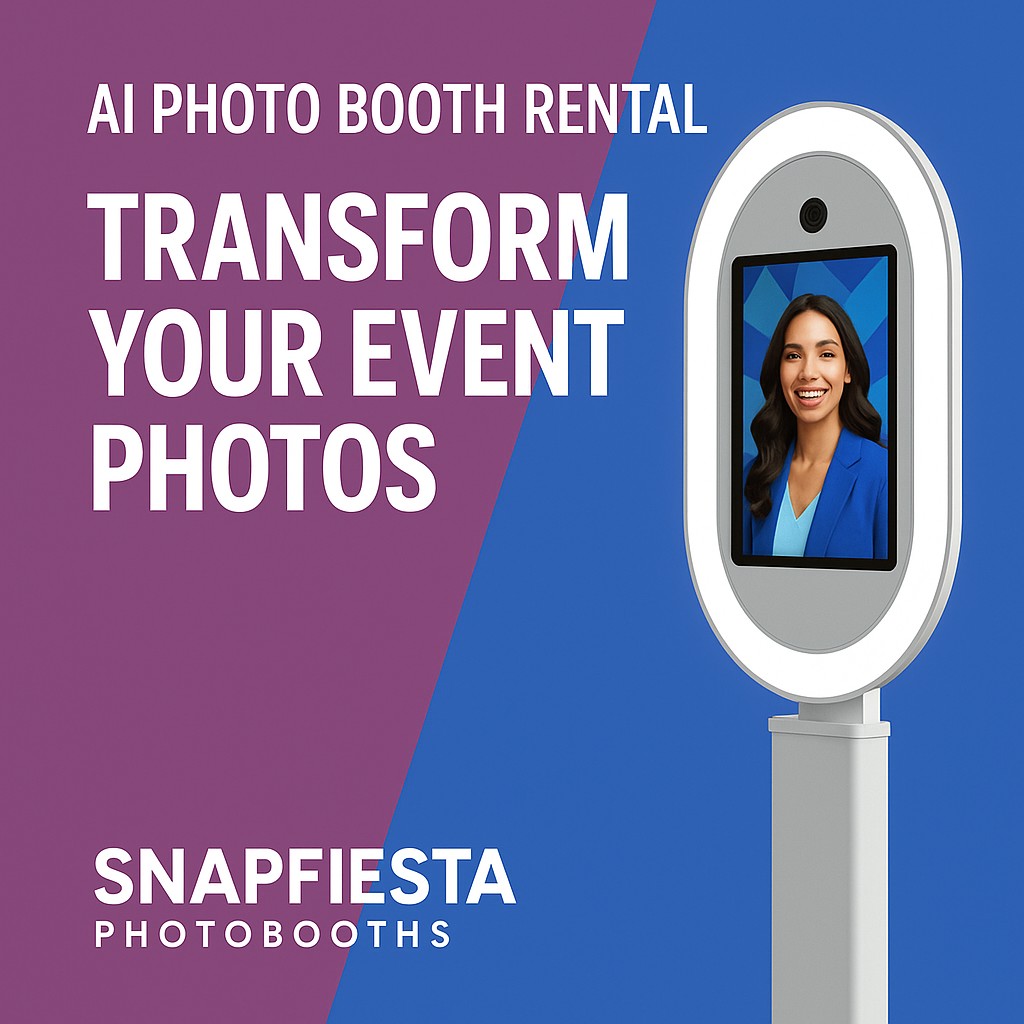
- AI photo booths transform guest selfies in real time with branded visuals, enabling instant previews, printing, and digital delivery aligned to event themes.
- Key capabilities include on-site customization, brand-consistent styles, lead capture, and hybrid in-person/online access for broader engagement.
- Implementation emphasizes smooth onboarding, scalable operations, ethics/moderation, and measurable outcomes through analytics and shareable assets.
Table of Contents
- AI Photo Booth Technology and Capabilities
- Real-Time Image Transformation
- Personalized and Theme-Based AI Transformations
- Instant Printing and Digital Delivery
- Customizable AI Styles and Branding
- Lead Generation and Data Capture
- Hybrid In-Person and Online Compatibility
- Event Types and Use Cases
- Brand Activation and Marketing Content
- Ease of Use and Operational Scalability
- Ethics, Moderation, and Quality Assurance
- Introduction
- 1. AI-Driven Portrait Transformations
- 2. Brand-Forward AI Experiences for Events
- 3. Real-Time AI Processing On Site
- 4. Lead Capture and Social Distribution
- 5. Use Cases Across Event Types
- 6. Choosing the Right AI Photo Booth Partner
- 7. Implementation and Onsite Experience
- FAQ
- Conclusion
AI Photo Booth Technology and Capabilities
The AI photo booth uses neural transformation to produce real time digital synthesis with high fidelity results suitable for professional use. For example, a guest at a corporate gala can choose a formal ensemble and a branded background, with previews rendered within two to three minutes for quick assessment. The system analyzes facial structure and blends outfits, props, and backdrops to generate images appropriate for corporate reports or social media assets.
Key capabilities include dynamic lighting adjustments, texture enhancement, and balanced shadows to maintain consistent quality across multiple sessions. Operators should enable in-session previews, inviting guests to request adjustments such as alternate color palettes or prop placements before finalizing, while staff capture approved shots for archival use.
Real-Time Image Transformation
The on-site transformation occurs within seconds as the system analyzes facial features and applies refined styling. Automatic adjustments to lighting, shadows, and textures help preserve natural appearance while conforming to selected aesthetics. This capability supports timely printing and digital delivery without interrupting the event flow.
Real-time image transformation previews allow guests to assess results before finalizing, contributing to efficient decision making and minimizing the need for re-takes during peak moments. The streamlined feedback loop helps maintain momentum from capture to keepsake creation.
Personalized and Theme-Based AI Transformations
The current approach focuses on delivering themed transformations that align with event narratives while maintaining production efficiency. In practice, images are generated by layering attendee portraits into curated outfits, props, and backgrounds that reflect chosen concepts, from fantasy to retro aesthetics. This supports rapid iteration for planners and marketers by providing ready-to-share assets that fit defined brand stories.
To ensure consistency and quality, teams should establish a concise workflow that prioritizes brand compliance and audience relevance. A recommended sequence includes selecting a theme, confirming pose and background compatibility, and performing a quick review before publishing. This framework helps preserve narrative coherence across activations and reduces production bottlenecks without compromising visual fidelity.
New insights for practical deployment include leveraging a library of theme templates tailored to common event scenarios and implementing a lightweight review checklist focused on color accuracy, asset branding, and accessibility considerations. By integrating these controls into on-site operations, activations can sustain a cohesive visual language while enabling fast content generation for live campaigns.
Instant Printing and Digital Delivery
Printed keepsakes and digital files are produced promptly following capture, supporting a seamless guest experience. The approach emphasizes reliability and consistency in on-site outputs while maintaining privacy considerations for sharing. Practical steps include configuring printers with standard branding overlays, establishing a gallery URL per event, and providing ready-to-share social post templates.
To mitigate variability, facilities should have backup printing options and explicit fallback paths for digital delivery when hardware performance is constrained. A practical workflow integrates automated gallery posting with opt-in sharing prompts, ensuring guests can access both physical and digital keepsakes without delays.
Customizable AI Styles and Branding
Brand-aligned AI filters, overlays, and virtual backgrounds are applied to activations to ensure visual consistency across outputs. Practical examples include logo placement and color treatments that reflect established guidelines while remaining unobtrusive on portraits. Outputs are tested across devices to confirm uniform appearance and legibility.
Lead Generation and Data Capture
The system enables moderated galleries and structured lead fields to gather attendee information without introducing friction. For example, guests may access a gallery through a light verification step, while consent and contact details are captured to support follow-up campaigns. Practical steps include configuring fields for name, email, company, and consent, and validating accessibility across devices with internal tests.
To convert engagement into qualified leads, the workflow can incorporate lightweight prompts that encourage responses, such as short questionnaires or event-related storytelling prompts presented before gallery access. This helps align data collection with campaign objectives while preserving a seamless guest experience. It is important to avoid excessive data requests and to provide clear opt-out options to minimize drop-off and maintain guest trust.
Hybrid In-Person and Online Compatibility
The on-site experience is designed for smooth operation using tablets or iPads, enabling staff to manage photo sessions, capture guests, and present live galleries with clarity. To extend participation beyond the venue, online attendees can join through browser access, QR codes at the event, or direct URLs in invitations. A practical setup includes a dedicated QR code station near the entrance and a clearly displayed branded link on screens to access the gallery, ensuring remote viewers remain engaged.
To maximize reach without compromising quality, the system should support scalable gallery hosting and secure access controls for both in-person and online participants. Real-time analytics can help sponsors measure engagement across channels, while fallback options ensure continuity during connectivity issues. The hybrid model thus enables inclusive participation and provides a cohesive experience for all attendees.
Event Types and Use Cases
AI photo booth transformations support a range of event scenarios by delivering on-brand, shareable visuals without introducing complexity to the attendee experience. Practical applications include weddings with themed portrait moments, corporate gatherings that yield immediate branding assets, and brand activations that generate dynamic content tailored to each audience segment. The emphasis is on mapping moments where AI adds tangible value while maintaining guest privacy and data controls.
Brand Activation and Marketing Content
Brand overlays enable on-site customization that mirrors campaign themes, such as color palettes, logos, and taglines, ensuring consistency across all printed and digital outputs. For example, a product launch can feature a branded gallery wall with sponsor logos and synchronized caption styles, creating a cohesive attendee experience. Practical steps include configuring templates in Snapfiesta Photobooths to pull from a brand asset library and testing overlays during a dry run before large events.
Branded galleries curate the most impactful images in real time, allowing marketing teams to showcase user-generated content that aligns with brand standards. Consider using a gallery layout that highlights key product shots alongside guest snaps, with caption blocks that include campaign hashtags. A recommended approach is to assign brand guidelines to a dedicated moderator role, who approves and curates images hourly to maintain quality control.
Customized templates streamline output across channels, enabling seamless export to social, email, and event recap decks. Actions to implement include creating a single-source template for all venues, mapping each template to corresponding event codes, and generating post-event reports that track engagement metrics like share rate and overall reach. This approach positions the AI photo booth as a scalable tool for brand activation, delivering repeatable, on-brand visual experiences across events while preserving brand integrity.
Ease of Use and Operational Scalability
The platform emphasizes straightforward operation for both operators and guests through clear controls and streamlined workflows that reduce setup time. For multi-event programs, it scales across fleets of photobooths by dynamically allocating resources while maintaining consistent capture speeds and image quality, even in venues with high attendee density. A practical rollout includes pre-event configuration, vendor alignment, on-site testing, and post-event diagnostics using built-in dashboards. For example, a 15-minute on-site calibration per booth and a 30-minute post-event review help identify workflow bottlenecks and opportunities for improvement. It is important to monitor network reliability and battery life in remote locations, and to plan contingency options such as offline capture modes or portable power banks to prevent interruptions.
Ethics, Moderation, and Quality Assurance
Moderation tools protect content across activations by filtering inappropriate material before it reaches audiences. For example, a corporate deployment relies on automated screening complemented by human review to prevent miscaptioned or strategy elements from appearing in shared galleries. Practical steps include establishing a defined approval workflow, real-time moderation dashboards, and clear escalation paths for flagged items. Quality assurance processes ensure consistent lighting, color calibration, print alignment, and color fidelity for on-site and digital outputs, supporting uniform quality across venues. Regular pre-event checklists verify equipment readiness, media templates, and branding accuracy, while post-event audits track deviations and guide subsequent improvements.
Related Innovation
Introduction
Why AI powered photo booths matter for events
At Snapfiesta Photobooths, technology and moments intersect to create interactive experiences at events. AI photo booths transform captures into visuals that align with brand themes and event narratives, yielding content that remains engaging in the moment and shareable across digital channels.
By leveraging real-time neural transformation and refined styling, guests participate more deeply, enhancing time-on-activation and overall satisfaction. This approach supports branded content that resonates with attendees and their networks, while providing measurable value for planners and sponsors.
Practical example: at a midsize product launch, an AI booth can generate overlays and color palettes that reflect the new line, then export social-ready GIFs within minutes for live posting. For event organizers, deploying a dedicated operator ensures quick setup, on-site QA, and analytics showing engagement spikes by hour.
Snapfiesta Photobooths: A premium solution
We offer a premium suite of AI enabled experiences, including 360 video booths, mirror booths, and high quality print stations. Our approach blends classic elegance with digital trends to support brand activation and social engagement.
Key strengths include real-time transformation, a broad set of AI styles, and scalable capabilities across venues. Our services are designed to deliver consistent, energetic moments that align with marketing goals and memorable celebrations.
Related Innovation
1. AI-Driven Portrait Transformations
What guests experience: from selfies to AI artwork
Guests begin with a standard selfie, which is enhanced through neural transformation to produce a distinct AI portrait. For example, a portrait captured during a conference break can be rendered with subtle branding elements and event colors for a publication-ready result. On-site previews enable attendees to compare the original with the transformed image, supporting informed choices.
Transformations occur in real time, enabling immediate printing or digital delivery to a mobile gallery or secure email attachment. A practical workflow manages queues during peak times, and opt-in prompts guide guests to select preferred styles before printing. The final output is a high-definition portrait suitable for professional profiles, event recaps, or branded galleries.
Popular transformation styles and branding options
Styles are developed to align with event themes and corporate guidelines. The following categories address common demand and provide practical application cues:
- Superhero: bold palettes, dynamic gestures, branded insignias, and a clear focal point for social sharing.
- Vintage: textured film grains, muted chroma, and retro typography integrated into the frame.
- Glam: refined lighting, even skin tones, and subtle texture that supports formal materials.
- Fantasy: imaginative motifs, mythic elements, and surreal backdrops that complement keynote visuals.
Branding options include overlays, consistent color cues, and dedicated galleries segmented by event track. A practical approach recommends predefined style templates per venue and a preview step to confirm overlays align with the desired narrative before printing.
2. Brand-Forward AI Experiences for Events
Branded characters and theme-consistent visuals
AI powered transformations enable rapid creation of branded portraits that reflect the event narrative and corporate identity. For example, a technology conference can generate attendee portraits that incorporate sponsor logos, color palettes, and typography aligned with brand guidelines, ensuring a cohesive appearance across materials. Real-time rendering supports consistency with the overall visual language, aiding recognition across channels such as newsletters, digital displays, and event dashboards.
At a product launch, branded visuals can be made available in on-site galleries and social media within minutes, shortening post-production cycles while preserving design integrity. On-site generation yields high-fidelity content suitable for live coverage, press notes, and recap assets.
Custom AI models aligned with event branding
Custom AI models can reproduce specific brand elements such as mascots, campaign motifs, or regional visuals. For example, a regional summit may require localized color schemes and language variants to resonate with diverse audiences while maintaining the core brand identity. This approach reduces variation across activations and results in a coherent portfolio of portraits that reinforce brand equity at scale.
Implementation supports iterative testing during setup, enabling refinement of styles, textures, and color grading before guest interactions begin. Practical steps include a short pilot to gather feedback on facial rendering and color accuracy, followed by adjustments to color grading to reduce drift during high-volume sessions.
Expert Insight
“Brand consistency isn’t a magic setting you switch on; it’s a disciplined system of guardrails, templates, approved elements, and human review that keep AI drafts on-brand at scale.” , Industry Analyst
3. Real-Time AI Processing On Site
Speed and accuracy of transformations
On site processing delivers immediate results as guests interact with the activation. For example, a corporate trade show scenario can generate branded headshots within seconds, while preserving natural likeness and applying established styles. The system analyzes facial features and expressions in real time, enabling prompt feedback that helps manage queues and maintain a steady activation flow.
Quality controls run alongside speed enhancements to balance texture fidelity, lighting, and color grading. Operators can set thresholds to prevent oversaturation or exaggerated shadows, ensuring outputs meet brand standards. Real time previews allow attendees to compare the capture with the final piece, supporting intentional selections.
Hardware-free or minimal setup options
Server-based processing supports hardware-free deployments, with guests joining via browsers on personal devices or a lightweight kiosk. For example, a retail pop-up can route participants through a branded micro-site, reducing onsite footprint and simplifying logistics. The absence of dedicated hardware also lowers capital expenditure and accelerates deployments for multi-location campaigns.
In environments with connectivity constraints, portable edge devices can handle peak traffic by caching sessions and performing batch uploads during lulls. This approach maintains consistent performance at large exhibitions and multi-venue activations, while providing clear failover guidelines and cost-efficient scalability.
4. Lead Capture and Social Distribution
Lead capture and social distribution are essential to maximizing return on investment from an AI photo booth activation. The system can integrate with event marketing platforms to collect attendee information at the moment of engagement, creating a streamlined path from interaction to follow up. This capability supports post event targeting and nurture campaigns while maintaining attendee privacy controls. For example, a corporate conference can route captured data to a CRM for segmenting executives, sponsors, and exhibitors, enabling tailored messaging without manual data entry.
Turn interactions into measurable engagement
The AI photo booth tracks interaction metrics such as session duration, transformation choices, and repeat participation. These signals translate into actionable insights that inform post event analytics and help calibrate future activations for higher participation and stronger brand resonance. Practically, teams can set benchmarks, for instance, aiming for a 15 percent increase in repeat participants year over year, and apply A/B testing on overlays and prompts to optimize results.
Seamless sharing and digital delivery
Output assets are optimized for rapid distribution across social networks and internal channels. Guests receive high quality digital files immediately after generation, with optional branded overlays and captions aligned to the event theme. On site QR codes and automated email delivery enable convenient access to galleries while preserving brand consistency. A recommended workflow includes configuring automatic gallery delivery to attendees within 60 minutes of capture and enabling opt-in for event hashtags to improve organic reach.
5. Use Cases Across Event Types
Weddings
AI photo booths provide keepsakes that mirror wedding aesthetics through real time styling options. Guests can preview a range of treatments and backgrounds before printing, supporting guest books and personalized keepsakes. The resulting gallery can be shared with couples for post-event appreciation.
- Wedding-themed templates aligned with color palettes and motifs.
- Consolidated previews to confirm branding across outputs.
- Dedicated galleries for guests and couples to access after the event.
Practically, planners should map a small set of wedding templates to the ceremony timeline, enabling smooth transitions during key moments. A recommended workflow includes selecting the theme, testing a few poses, and providing a gallery link for post-event access. For bandwidth-constrained venues, offline caching of high-resolution assets supports rapid print and sharing without compromising quality.
Corporate activations
In corporate settings, AI transformations reinforce brand identity at scale and support internal as well as external communications. Onsite visuals can render attendees as branded characters or aligned with campaign motifs, aiding immediate content creation for reports and recaps. The immediacy of results accelerates post-event asset delivery.
- Branded artwork that echoes company visuals and branding guidelines.
- Lead capture and attendee analytics to inform follow-up campaigns.
- Consistent outputs suitable for professional networks and event archives.
Organizations may run campaigns such as new product launches, delivering portraits in product colors and exporting an asset pack with high-res images and social-ready formats. It is important to adhere to privacy regulations when collecting attendee data and to provide opt-out options as a standard practice.
Social gatherings
For social events, versatility drives engagement through multiple expressive styles. Group portraits, retro prints, and imaginative scenes encourage participation and sharing. Live previews and gallery displays motivate guests to explore diverse transformations.
- A broad range of styles for playful and sophisticated outputs.
- Group portrait modes that maintain cohesive styling across faces.
- Assets optimized for rapid sharing on social platforms.
Practical tips include placing a concise guide at the booth detailing available styles, render times, and gallery access. If displays are available, showcasing a rotating selection of transformations can sustain interest. Avoid overwhelming participants with too many options by organizing styles into themed collections for quicker decision-making.
Best fit AI features for each scenario
- Weddings: cohesive color grading, group harmony detection, guest book integration.
- Corporate activations: brand aligned visuals, lead capture, marketing deliverables.
- Social gatherings: organized style collections, ready-to-share exports, on site gallery displays.
6. Choosing the Right AI Photo Booth Partner
Selecting an AI photo booth partner should be guided by core capabilities that directly impact on-site performance and post-event value. A careful evaluation ensures brand activation remains consistent and outcomes are measurable across events.
Key capabilities to look for (AI quality, customization, scale)
AI quality is foundational. Seek systems that deliver high fidelity neural transformations with minimal latency and offer a broad set of authentic AI styles aligned with brand aesthetics. In practice, request live demonstrations that show color accuracy under varied lighting and preservation of image integrity during rapid-fire sessions. Customization should include branded artwork, theming templates, and the ability to tailor AI models to match specific visual identities. For example, provide a catalog of approved templates and a process to approve any new style within 48 hours. Scale considerations address concurrent sessions, multi-venue deployments, and peak-period support to maintain steady performance. A capable partner provides both hardware-friendly and hardware-free configurations to fit venue constraints, with a documented setup checklist for different room sizes and power availabilities.
Additional criteria include data handling practices, ease of content delivery, and readiness for integration with marketing platforms for lead capture and analytics. Ensure end-to-end encryption for on-site transfers, and verify retention policies align with campaign timelines. Real-time previews, reliable on-site support, and clear service level agreements further distinguish a dependable supplier. Request case studies detailing error rates, throughput during peak hours, and recovery times after network interruptions.
Why Snapfiesta Photobooths stands out
Snapfiesta Photobooths delivers a comprehensive AI transformation experience with a focus on branded artwork and versatile style sets. The platform supports real-time processing, on-site previews, and seamless digital delivery for immediate sharing and branded galleries. Practical deployment notes include a modular setup that can be deployed in spaces as small as 200 square feet and scaled for venues up to 2,000 square feet with separate lighting and backdrop zones. Flexible deployment accommodates diverse event footprints, from intimate sessions to large activations, across Northern Colorado and the Denver metro area, backed by regional support and data-driven performance metrics.
Expert Insight
“AI photo booths turn a standard selfie into a piece of digital art that guests are significantly more likely to share, delivering unmatched personalization and brand-aligned experiences in real time.” , Industry Analyst
7. Implementation and Onsite Experience
A successful ai photo booth deployment hinges on an effective on site experience. The onboarding process should immediately engage guests and clarify how to interact with transformation features. The onsite flow must prioritize quick access to branded outputs, clear guidance, and a seamless user journey.
Guest onboarding, participation tips, and troubleshooting
Onsite onboarding should present intuitive prompts, a brief demonstration screen, and accessible help resources. Encourage guests to experiment with lighting, angles, and styles to maximize transformation quality. Troubleshooting workflows address latency, color drift, and printing delays, supported by staff checklists and predefined recovery steps.
- Provide a concise visual tutorial at the activation zone entrance.
- Offer quick start tips, including single gesture interactions and guided previews.
- Maintain standby devices and spare cables to minimize downtime.
Staffing considerations and support options
Staffing should balance guest interaction with technical oversight. Assign roles for guest hosts, technical operators, and a lead for content delivery and backup workflows. Support options include remote monitoring, on site tech packs, and rapid replacement modules to sustain throughput during peak periods.
| Aspect | Considerations | Recommended Practice |
|---|---|---|
| Guest flow | Queuing, start times, and session length | Staged entry and moderated session windows to maintain pace |
| Content delivery | Delivery formats and gallery access | Real time previews with instant digital gallery links |
| Technical support | Latency, calibration, and printer status | Dedicated on site technician plus contingency hardware |
Expert Insight
“AI-driven photo booths create real curiosity, pull guests in naturally, and generate immediate, shareable art that looks custom-made for each guest, driving engagement and spontaneous participation at events.” , Industry Analyst
FAQ
This section provides concise answers to common questions about AI photo booth rentals and their applications for events. Each response focuses on practical considerations for planning and execution.
What is an ai photo booth?
An ai photo booth uses neural transformation and deep learning to produce real-time, branded artwork from live images. Outputs range from lifelike portraits to stylized art aligned with event themes, delivering a clear and professional visual experience.
How does real-time transformation work on site?
On-site processing can occur on-device or via edge servers, enabling immediate AI styles as guests pose. A preview monitor, fast printing, and instant digital delivery create a smooth, efficient experience. For example, a tech conference might keep data within the venue network while delivering quick turnaround.
Can the AI styles be customized for a brand?
Yes. Customization typically includes branded artwork, theme-aligned templates, and the ability to tailor AI models to reflect a specific visual identity. This supports consistent brand activation across outputs. Practical steps involve providing a style guide, testing a few templates before the event, and validating color accuracy on final prints.
What formats are available for distribution?
Deliverables commonly include on-site prints, digital galleries, and social-ready media. Some configurations support lead capture and integration with marketing platforms for post-event analytics. A practical workflow pairs prints with a secure gallery link to maintain attendee privacy while boosting engagement.
What venues are suitable for deployment?
AI photo booths can be deployed at corporate venues, conference centers, outdoor festivals, and mixed-location events. Configurations range to fit space and power constraints. For compact spaces, a 2×2 meter footprint with a battery backup helps avoid interruptions from brief power dips.
Conclusion
AI photo booth technology represents a strategic upgrade for event experiences, delivering immersive visuals that align with brand narratives. For weddings, corporate activations, or product launches, real-time AI transformations can adapt visuals to ambient lighting and venue themes, ensuring consistent quality across all guest interactions.
Snapfiesta Photobooths integrates seamless on-site performance with refined design options, enabling an efficient workflow from setup to distribution of outputs. By combining branded artwork, diverse AI styles, and rapid delivery, the offering supports measurable touchpoints that extend beyond the event floor into digital channels and post-event marketing.
- Real-time transformations support dynamic branding during live activations with templates aligned to event color schemes.
- Branded outputs, including differentiated AI models and watermarking, reinforce brand presentation across social, email, and website galleries.
- Onsite delivery workflows enable instant access to prints and digital galleries, along with downloadable assets for attendees and sponsors.
References
|